
Establishing the “Patience First” Boundary
We’ve all been there: you grab your keys, and suddenly your calm dog transforms into a furry whirlwind. By the time you get to the front door, you’re being tripped, leaned on, or practically dragged out the house before the door is even wide enough for a human to pass through.
At Zoomies Dog Care, we believe the walk doesn’t actually start at the sidewalk—it starts at the door. Establishing a “Wait at the Door” boundary isn’t just about good manners; it’s about setting a tone of calm focus for the entire adventure ahead.
Why This Boundary Matters
It’s easy to view a dog’s excitement as cute; what kind of pet-parents would we be if we didn’t love seeing those tails whip in excitement? I understand the urge to hype up your pup and the instant gratification you get from their joyful performances. However, an over-excited dog at the threshold can pose a serious safety hazard.
- Safety First: A dog that bolts out the door can easily slip into the street or encounter a neighbor’s dog before you’re ready.
- State of Mind: If a dog starts a walk at a “level 10” energy, they are far more likely to pull on the leash or react to triggers like squirrels or cars.
- Leadership: You need to reinforce that you are the one navigating the environment, which helps anxious dogs feel more secure.
Step 1: Desensitizing the Triggers
Most dogs start getting hyped up long before you touch the doorknob. They recognize the “departure cues”: the jingle of keys, the sound of the leash drawer, or you putting on your walking shoes. My dogs even know, if they aren’t in their crates when the shoes and keys come out, they are in for an adventure.
To fix the dash-for-the-door, you have to break the association between these sounds and the immediate walk. Try “faking out” your dog throughout the day:
- Pick up your keys, walk into the kitchen, put them down, and sit back down.
- Put on your walking shoes, then go fold laundry.
- Clip the leash on, walk around the living room, then take it off and go back to what you were doing.
- Put your dog in the crate while you get ready, open the crate and walk right to the door, put your keys and the leash back down.
When these triggers stop being a 100% guarantee of a walk, the baseline excitement level drops, making it much easier for your dog to actually listen.
Step 2: The “Sit” Requirement
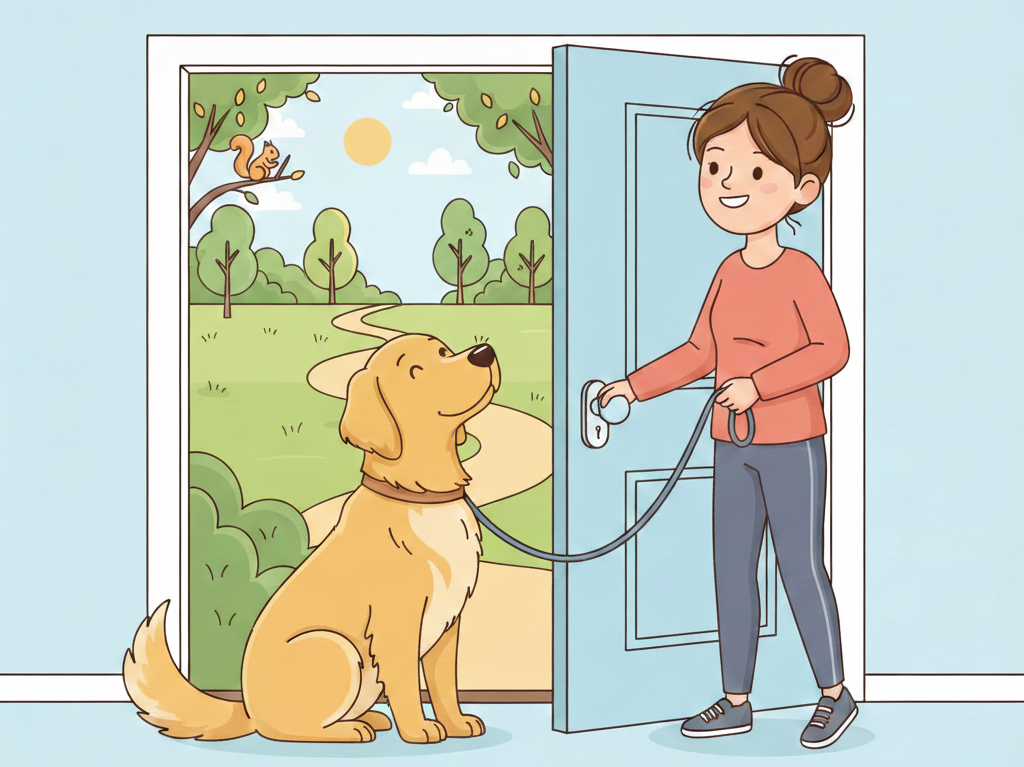
Once your dog is no longer vibrating with excitement at the sight of their leash, it’s time to set the new rule: The door does not move until you are sitting.
- The Prep: With your dog on a leash, stand by the door. Wait for them to sit. Don’t give a hundred commands—just wait for them to offer the behavior.
- The Hand on the Knob: Once they sit, reach for the doorknob. If they stand up, take your hand off the knob immediately.
- The Crack in the Door: Slowly turn the knob and crack the door an inch. If the dog moves, close the door. (Be careful of paws and noses!)
- The Goal: You want to be able to open the door wide while your dog remains in a seated stay.
Step 3: “Let’s Go”
The final and most important piece is the release word. Don’t let your dog step through that door just because you finished opening it; they should only move once you’ve told them it’s time.
Use a clear release command like Okay, Walk or Let’s go. This ensures that you are the one bringing them into the world, rather than them dragging you into it.
Zoomies Pro Tip
Patience is a muscle! If your dog has been bolting out the door for years, it might take a week of consistent practice before they “get” it. Don’t rush the process—the five minutes you spend waiting for a sit at the door will save you thirty minutes of frustration on the walk.