The Science of the Strand
Welcome to the first installment of our new four-part series: The Zoomies Guide to Dog Coat Types. Over the next few weeks, we’re going to pull back the curtain on the anatomy of canine coats to help you understand exactly what’s going on with your dog’s fur or hair, how to manage it at home, and why certain breeds require more time on the grooming table than others. Throughout the series, you’ll learn what your dog’s ideal grooming schedule is, including professional appointments and the home maintenance required in between.
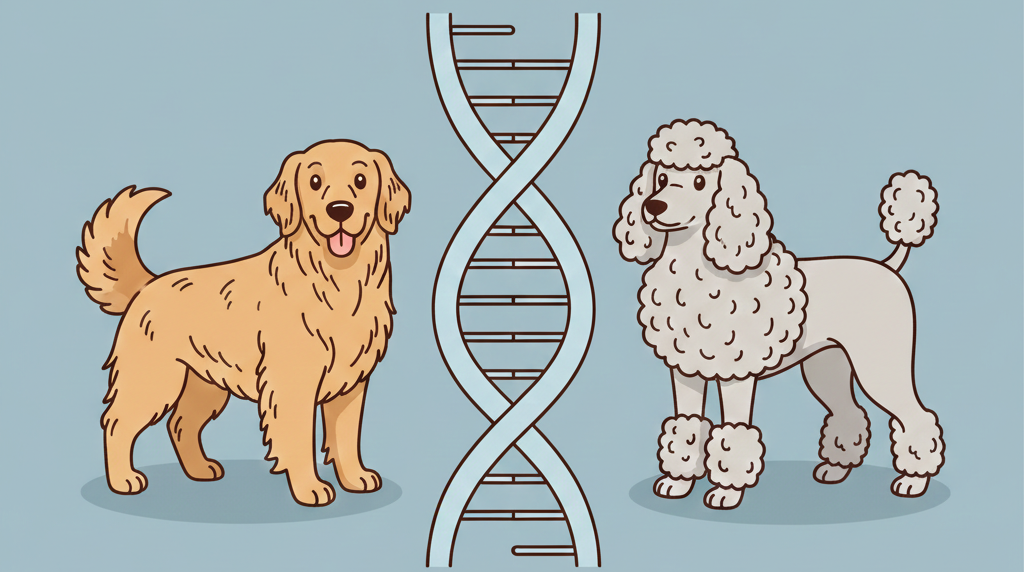
Before we can identify your dog’s specific “category,” we have to start with the basics: Is it hair, or is it fur?
The Biological Breakdown
Scientifically speaking, hair and fur are made of the same thing—keratin. However, the way they grow, shed and feel is where the paths diverge.
Dog Fur
Most “double-coated” dogs have fur. Fur typically grows to a specific length and then stops. It has a shorter growth cycle, meaning it reaches its “old age” quickly, dies, and falls out—usually all over your rug.
- The Texture: Usually thicker and coarser.
- The Undercoat: Fur often comes with a dense, fuzzy undercoat designed for temperature regulation.
- Examples: Labrador Retrievers, German Shepherds, Huskies, and Golden Retrievers.
Dog Hair
Dogs with “hair” usually have a single layer (no undercoat) and a much longer growth cycle. Because the hair keeps growing and doesn’t fall out as frequently, these dogs are often labeled as “hypoallergenic.”
- The Texture: Usually finer, smoother, and can be curly, wavy, or straight.
- The Growth: Like human hair, it will just keep growing until it is cut.
- Examples: Poodles, Shih Tzus, Yorkies, and Maltese.
Why Does This Matter to You?
Understanding which one your dog has changes your “homework” as a pet parent.
The Fur Focus: Deshedding
If your dog has fur, your primary goal at home is impacted hair management. Because fur sheds constantly, that dead hair can get trapped against the skin, leading to “packing.” You’ll want to focus on brushing to remove the dead undercoat before it ends up on your furniture. These dogs don’t usually need “haircuts,” but they benefit immensely from professional deshedding treatments.
The Hair Focus: Dematting
If your dog has hair, your primary goal is tangle prevention. Since the hair doesn’t fall out, it tends to wrap around itself. If you aren’t brushing a hair-coated dog daily, those long strands will turn into mats (knots) very quickly. These dogs require a strict professional grooming schedule (usually every 4–8 weeks) to keep their length manageable and their skin healthy.
What’s Next?
Now that you know the difference between the “strand” types, are you ready to figure out where your dog fits in the grander scheme of things?
Keep an eye out for Part Two: Coat Identification – Finding Your Dog’s Category, where we’ll dive into smooth, wire, curly, and combination coats!