How We Handle Maryland Mud So Your House Stays Clean
The Maryland Clay Struggle
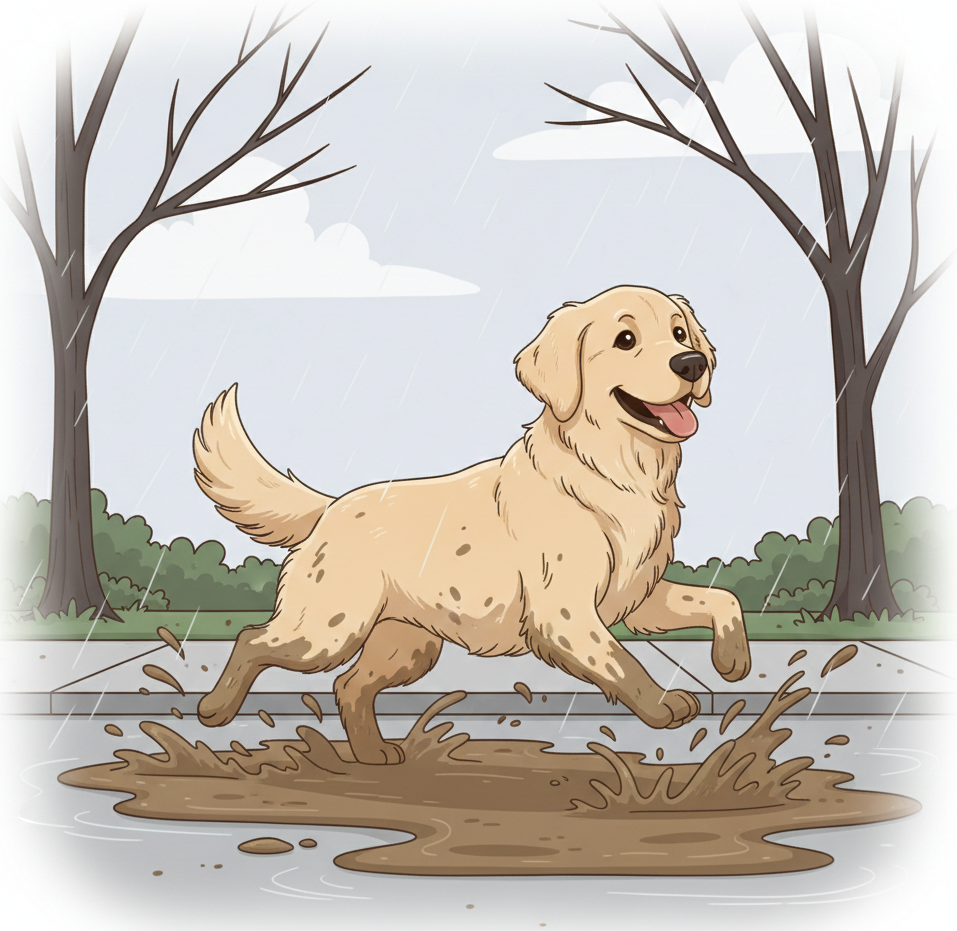
If you’ve lived in Montgomery County for more than a single season, you know exactly what “swamp season” feels like. Between the melting snow, the spring rains, and our infamous Maryland red clay, our backyards and local trails quickly turn into a sticky, messy obstacle course. For a dog, this is paradise—there is nothing quite as exciting as a fresh, squelchy mud puddle. For a pet parent, however, seeing those four muddy paws heading toward a beige rug is enough to cause a minor heart attack.
Our Promise
At Zoomies, we believe that a little rain (or a lot of mud) shouldn’t stand in the way of a great walk. We also believe you shouldn’t have to spend your evening deep-cleaning your floors just because your pup had an adventure. That is why we have developed a rigorous “Clean Paw Policy.” When we bring your dog home, our job isn’t done until they are clean, dry, and rug-ready. We take the mess with us so that you can come home to a tired, happy dog and a house that looks exactly the way you left it.
The Zoomies Entryway Protocol
The secret to a clean house isn’t just a good towel—it’s a good routine. We manage the transition from “outdoor explorer” to “indoor companion” before your dog ever sets a paw on your hardwood or carpet. By controlling the entryway, we stop the mess at the source.
The “Wait” Command
Cleanliness starts with a little bit of discipline. We practice a firm “Wait” command at the threshold of every home. Teaching a dog to pause at the door serves two vital purposes: it prevents them from bolting into the house while their paws are still dripping, and it ensures they are calm and focused while we begin the cleanup. This boundary training is a core part of our walking routine; it turns a chaotic, muddy entrance into a structured, predictable moment of grooming.
Mud-Catching Zone
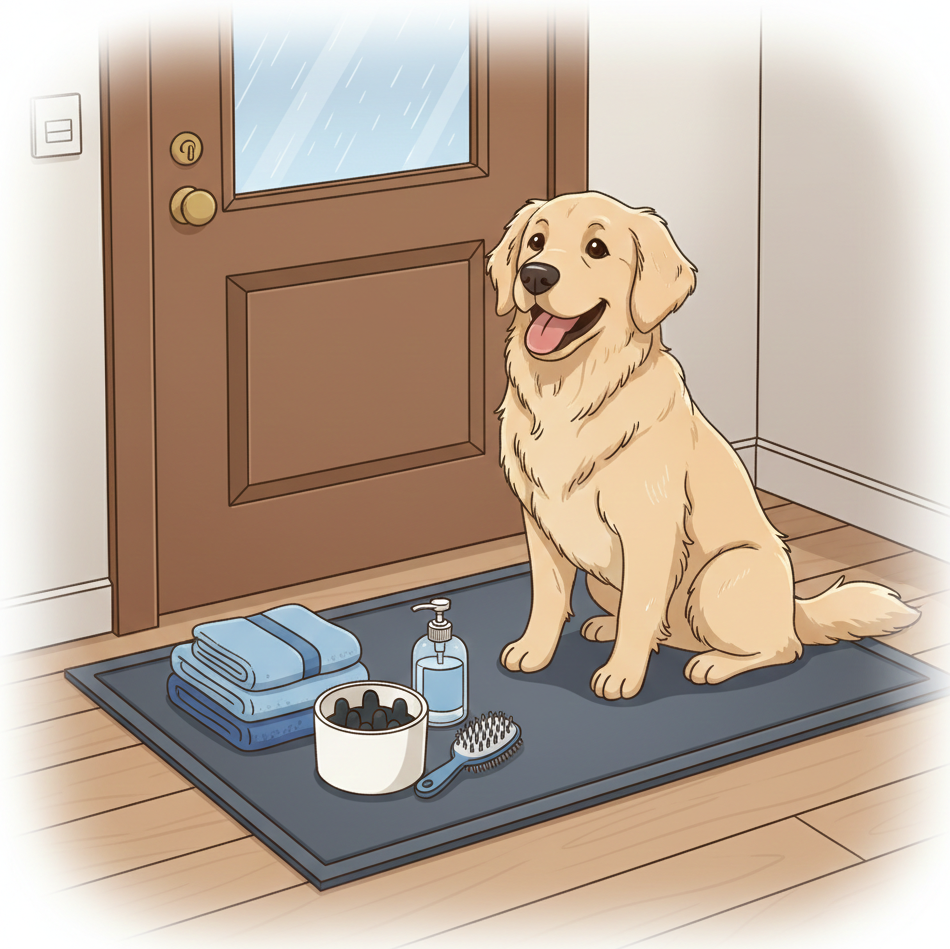
Success in the “swamp season” is all about preparation. Before we even head out for a walk, we like to ensure there is a designated “staging area” ready for our return. This usually involves a high-absorbent, heavy-duty mat right inside the door to catch the first wave of moisture. We keep a stack of clean towels and our cleaning tools within arm’s reach so that we don’t have to go hunting for supplies while holding a leash. By having this zone prepped and ready, we can move straight from the threshold to the “deep clean” without the mud ever traveling further into your home.
Our Cleaning Toolkit
To tackle the stubborn Maryland clay, we’ve moved past the old kitchen rag. We use a specialized toolkit designed to pull grime out of fur rather than just pushing it around.
Microfiber Revolution
If you are still using old cotton towels, it might be time for an upgrade. We swear by microfiber for “magnetic” mud removal. Unlike cotton, which tends to smear wet dirt, microfiber has millions of tiny hooks that grab and lift the particles away from the hair shaft. It is significantly more absorbent, meaning we can get a soggy Golden Retriever dry in half the time it takes with a standard bath towel.
Paw Washers
For those extra deep puddles, we use tools like the MudBuster. These are essentially portable cups lined with soft silicone bristles. You fill them with a little warm water, insert the paw, and give it a twist. It’s remarkably effective at getting the grit out from between the pads and webbing. Think of it as putting each individual paw through a miniature, touchless car wash—it gets into all the “undercarriage” nooks and crannies that a towel simply can’t reach!
Waterless Shampoo and Brushing
Lower-to-the-ground breeds like Corgis and Dachshunds often suffer from the “underbelly splash,” where their entire chest becomes a mud magnet. For these situations, we use a waterless shampoo foam. We massage it into the damp fur to break down the dirt and then follow up with a quick brush out. This doesn’t just clean the coat; it prevents those tiny tangles from turning into painful mats once the fur dries, keeping your pup looking fluffy and fresh.
Pro-Groomer Tips for Mud Prevention
As a groomer and dog walker, I’ve learned that the best way to handle mud is to make it harder for the dirt to stick in the first place. A little bit of maintenance goes a long way in keeping your entryway clean.
Trimming the Grinch Feet
One of the biggest culprits for tracking in half the backyard is what we affectionately call “Grinch Feet”—that long, wispy hair that grows out from between the toes and around the paw pads. This hair acts like a literal mop, soaking up water and trapping clumps of mud. By keeping this hair trimmed flush with the pads, we significantly reduce the surface area for mud to “hitch a ride.” It makes the post-walk wipe-down ten times faster because there’s simply less fur to dry!
Paw Wax
Before we head out into the slush or mud, we often apply a layer of paw wax, such as Musher’s Secret. Originally designed for sled dogs, this food-grade wax creates a breathable, invisible barrier on the pads. Not only does it protect against salt and ice, but it also makes the mud slide right off instead of sticking to the skin. It’s like putting a non-stick coating on your dog’s paws, ensuring that whatever they step in stays outside.
The “Dry” Technique
When it comes to the final dry-down, the way you use the towel is just as important as the towel itself. We use the “Blot, Don’t Rub” technique. Vigorous rubbing—especially on long-haired or curly-coated breeds—can cause the fur to tangle and mat, and it can actually irritate the skin if there is any leftover grit. Instead, we wrap the paw or the underbelly in a microfiber towel and apply firm, gentle pressure to squeeze the moisture out.
Protecting the coat and skin is our priority, but ensuring those paws are 100% dry is the secret to a healthy pup. Leaving paws damp is a recipe for that classic “wet dog” smell, but more importantly, it can lead to fungal issues like yeast infections in the warm, dark spaces between the toes. We take that extra minute to make sure every “toe-bean” is bone-dry before we call the job done.
Rainy Day Reliability
We know that a rainy forecast can feel like a headache for a busy pet parent, but at Zoomies, we see it as just another day at the office. You shouldn’t have to choose between a bored dog and a muddy house. Our mission is to provide rainy day reliability: we handle the trekking, the splashing, and—most importantly—the entire cleanup process. You can head to work or run your errands with total peace of mind, knowing that when you walk through your front door, you’ll find a clean home and a tired, happy dog who’s already dreaming of their next adventure.