
Winning the Leash War
Why "Beating the Pull" Starts Before You Leave the Driveway
Does your daily walk feel more like a game of tug‑of‑war? At Zoomies Dog Care, we believe a calm, enjoyable walk doesn’t begin five blocks from home — it begins the moment you step outside. If your dog is constantly pulling on the leash, the key is learning how to read their excitement level and establishing a clear, steady connection with them right from the start.
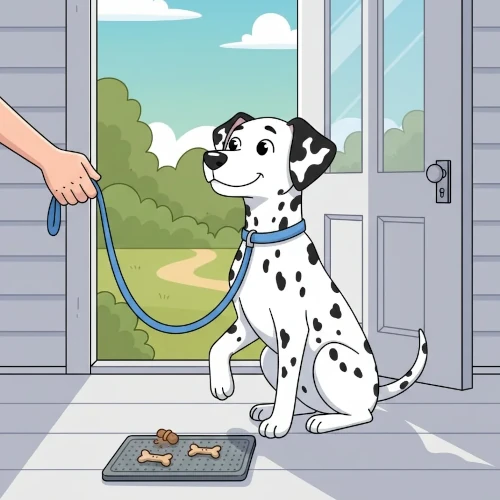
The Science of the Threshold
To a dog, the front door isn’t just a piece of wood - it’s a gateway to a world bursting with stimulation. The moment that door cracks open, many dogs experience a spike in environmental arousal. Their brain releases a rush of dopamine and adrenaline as they anticipate everything waiting outside.
In that heightened state, the dog’s thinking brain — the part responsible for decision‑making and self‑control — takes a back seat, and the reactive part of the brain steps forward. That’s why a dog who can sit perfectly in the kitchen suddenly seems unable to do it at the door. It’s not disobedience; their brain is simply overwhelmed.
By asking for a calm sit before stepping outside, you’re helping your dog keep their thinking brain online. You’re teaching them that a steady, relaxed mindset is what opens the door to the world — and that lesson becomes the foundation for a peaceful walk.
The Power of the Firm Handshake
Once the door opens, the connection shifts to the leash. I always hold the leash in my dominant hand so I can maintain a steady, reliable grip. If I'm walking two dogs, each leash gets its own hand so I can give both dogs clear, consistent guidance. Think of it like offering a firm, confident handshake.
This kind of contact provides what trainers call deep pressure input. Just like a weighted blanket can help a person feel grounded, a firm, steady leash connection can help an excited dog settle. Your dog can feel your confidence through that line. If the leash is jittery or frantic, their energy will mirror it. But when your grip is calm and consistent, you’re communicating leadership before you even take the first step.
The Power Duo Reset
At Zoomies, we use a specific Power Duo tactic to interrupt the opposition reflex — that instinctive urge dogs have to lean or pull against a tight leash. When I pick up your dog from your home, my partner, Spray, waits just outside the door with training treats in hand.
This creates a competing motivator. Even if your dog is eager to charge into the neighborhood, spotting Spray with a reward helps trigger a mental reset. Their focus shifts from forward‑pulling excitement to a calm, friendly greeting. Starting the walk on this grounded, social note prevents that initial adrenaline spike from setting the tone for the entire outing.
The Reverse Rule: Taking Back Control
If your dog starts to pull toward an exciting scent or a darting squirrel, we simply turn and walk in the opposite direction. This isn’t about punishment - it’s about clarity. When a dog pulls toward something they want, the forward motion stops. When the leash stays loose, the walk continues toward their goal.
By consistently controlling the direction of the walk, we teach the dog that staying connected and keeping slack in the leash is the fastest, most reliable way to reach the things they’re interested in. It’s a gentle, fair way to show that cooperation moves the walk forward, while pulling does the opposite.
A Pro Tip: the Pre-Walk Ritual
If your dog starts spinning the moment you pick up your keys, it’s a sign that the routine itself has become a trigger. One of the easiest ways to soften that reaction is to desensitize the pattern. Every so often, pick up your keys and put on your walking shoes, then simply go sit on the couch. Clip on your dog’s harness and leash, go start a load of laundry, then come back and take it off again.
By breaking the predictable chain of events that leads to high arousal, you help your dog keep their baseline energy at a manageable level long before you reach the driveway. A calmer start makes for a calmer walk — and it all begins with a ritual that teaches your dog there’s no need to rev up before the adventure even begins.