
The Winter Coat Myth
The Fluffy Fallacy
It’s a familiar sight around Montgomery County once the temperatures dip: dogs growing fluffier by the week because their humans assume that more length equals more warmth. It’s an understandable instinct, but it’s also one of the biggest winter grooming myths out there. While a dog’s coat does offer protection, letting it grow unchecked doesn’t create a magical winter parka. Without regular brushing and professional upkeep, that extra length can hide skin issues, trap debris, and make it harder for your dog to stay comfortable in the cold.
Insulation vs Obstruction
To understand why grooming still matters in winter, it helps to look at how a healthy coat actually insulates. When the hair is clean, brushed, and free of tangles, each strand stands slightly apart from the others. That separation creates “loft,” which traps a thin layer of warm air close to the body. It’s the same principle that makes down jackets so effective: the warmth comes from the air pockets, not the length of the material.
But when a coat is neglected, that system collapses. Dirt, natural oils, and early matting cause the hair to clump together, eliminating those insulating air pockets and making the coat dense and heavy. A matted or dirty coat can’t loft; instead it holds moisture from snow and slush against the skin, which makes a dog colder.
The Hidden Danger of Matting and Moisture
Snow, Salt, and Slush Cycle
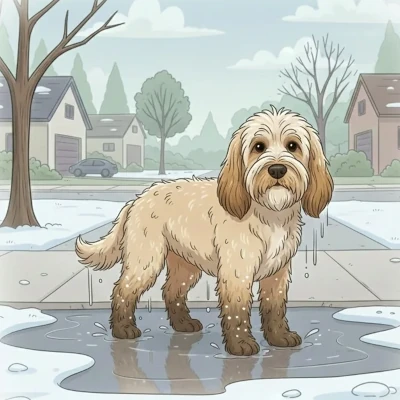
Living in Montgomery County means winter is rarely that clean, powdery cold people picture. More often it’s wet snow, freezing rain, and slush - exactly the kind of mess that clings to a long coat. For dogs with natural length, every walk becomes an opportunity for trouble. Road salt and de‑icing chemicals work their way deep into the fur, causing dryness and irritation. The itching and discomfort can last long after the walk is over.
The bigger issue, though, is the Sponge Effect - a long, dense coat behaves just like a sponge, soaking up moisture from snow and slush. Even if the top layer feels dry after a quick towel rub, the inner layers often stay damp, creating the perfect environment for hot spots, bacterial or yeast overgrowth, and can even contribute to fungal issues.
The Invisible Mat
Hidden knots and tangles are one of the biggest surprises for pet parents. You can run your hand down your dog’s back and feel nothing but softness, yet mats almost never start on the surface. They form right at the skin, especially in high‑friction spots. By the time you can actually see matting on top of the coat, it’s usually already pelted - a dense, felt‑like sheet of hair that can’t be brushed out safely without hurting the dog.
When these mats get wet and then dry on their own, the fibers tighten and shrink, pulling on the skin with every step, stretch, or shake. Imagine a ponytail that’s just a little too tight - now imagine that sensation across your whole body, getting worse each day. That’s what an unmaintained winter coat can feel like for a dog.
Maintenance Free is a Myth
The Groomer's Perspective
A lot of owners try to manage winter fluff at home with a quick bath, but that usually makes things worse. If there’s any hidden matting or packed undercoat, water acts like glue. Those tangles tighten as they dry; without the right equipment to blast the moisture out and proper brushing the matting only becomes more severe.
This is where Line Brushing comes in. Maintaining a winter coat isn’t about running a brush over the top layer; that only touches the surface. You have to part the hair all the way down to the skin and brush outward, section by section. That’s the only way to reach the dense undercoat where real tangles form. At Zoomies, we rely on this technique to keep coats functional, breathable, and comfortable, even through the messiest months of the year.
High Friction Areas
When you are maintaining a longer coat, you have to be vigilant checking the "danger zones." These are the areas where the hair is constantl being rubbed together, leading to rapid matting.
- Behind the Ears: the soft, fine hair here tangles easily, especially if your dog wears a collar.
- Armpits: constant movement during walks makes this a prime spot for tight, painful knots
- Under Harness Straps: if your pup wears a harness, the friction fro the straps against a thick winter coat can cause mats quickl.
Zoomies Tips for Winter Upkeep
The Post Walk Protocol
For my fellow Rockville pet parents, we recommend a quick Post-Walk Protocal to keep your pup's coat from becoming unmanageable. First, give your pup a thorough towel-dry. Drying the coat thoroughly is actually more vital how long the hair is. If you leave it damp, you are inviting mats to form as the hair dries and shrinks. Once dry to the touch, run a wide-toothed comb through, paying special attention to the high-friction areas. Follow with a paw-check - look for ice balls stuck between the toes and wipe away any chemical de-icers that can irritate the pads. Spending five minutes on this daily upkeep prevents moisture from sitting against the skin and keeps the fluff functional and healthy.
Scheduling for Success
As tempting as it is to skip grooming appointments when its freezing outside, keeping a regular grooming schedule throughout the winter is the only way to prevent the Spring Shave-Down heartbreak. When a dog goes months without grooming because its too cold, the matting often becomes so severe that a groomer has no choise but to shave the coat, for the dog's safety and comfort. By maintaining a 4-6 wweek rotation, we can keep the coa manageable, thin out the heavy undercoat, and ensure your dog stays warm and mat-free until the Maryland spring finally arrives.
Comfort Over Aesthetic
At the end of the day, the Zoomies priority is always the dog's skin health and physical comfort. While the longer styles are undeniably cute, aesthetic should never come at the cost of a dog's well-being. Skin that can't breathe under a layer of pelted fur is prone to sores, bruising, and infections. Choosing a shorter cut isn't failing at winter care - it's an act of compassion that ensures your pup can move, sleep and play without the constant tug of tangled hair.