
Teddy Roosevelt Terrier
The Origin
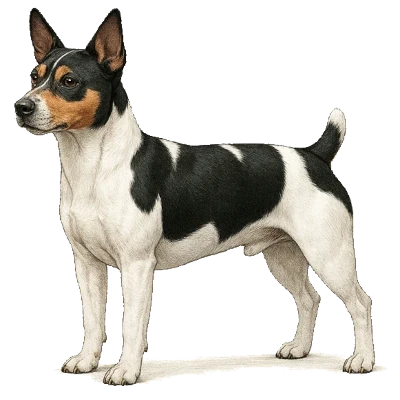
This American working dog breed is derived from the terrier-type dogs brought to the U.S by European immigrants in the 18th and 19th centuries. Ancestrally, it is a mix of many classic terriers, including the now extinct English White Terrier. Beagle was added for increased scenting ability and Italian Greyhounds for speed. This mix produced a terrier with strong prey drive, excellent scenting, and a calmer temperament than many of other terriers.
Until recently, the Teddy Roosevelt Terrier (TRT) was considered a short-legged version of the Rat Terrier, known as Type B. In 1999, a separate breed standard was drafted for the Type B Terriers. The American TRT Club formed in 2016 and the breed was entered as AKC Foundation Stock. In 2019, the breed joined the AKC Miscellaneous Class, and reached full recognition in the Terrier Class this year.
Despite its long history, the “official” gene pool is still relatively small. Most Type B dogs were registered as short-legged Rat Terriers prior to 1999. Breeders are developing the TRT breed carefully, focusing on maintaining its working ability, preserving the overall health and structure and avoiding rapid expansion that could compromise breed quality. Their niche audience is mostly restricted to farm dog circles, ratting dog communities and rare-breed enthusiasts.
The Appearance
The TRT features a low-set rectangular body longer than it is tall. The ears are V-Shaped and can be full-prick, tipped, partial-prick, or button. Their coats come in a wide variety of two and three-color combinations, though one of the colors must be white. Merle markings are not considered breed standard, nor are solid colors. They stand 8-10 inches and have smooth coats.
The Charm
The breed name distinguishes TRT dogs from Rat Terrier, giving it that charm factor, though it is a bit misleading. Roosevelt didn’t create the breed; it was named in honor of his famous love for ratting terriers. Legend says he used the vermin-hunting terriers to exterminate a major rat problem in the White House. The name was selected to give the breed a distinct American Farm Dog identity with a historical anchor and high marketability.