
The Gear That Matters
The “What” and “Why” Behind Winter Traction
If there is one thing we know about February in Montgomery County, it's that the weather has a bit of an identity crisis. One morning we're navigating a sparkling winter wonderland in Rockville, and by the afternoon, we're trekking through half-frozen slush. As professional walkers, we don't have the luxury of waiting for a better day, which means our gear has to be up to the challenge. Choosing the right equipment isn't just a matter of convenience; it's the foundation of a successful, stress-free walk when the elements are against us.
The Philosophy: Comfort Meets Control
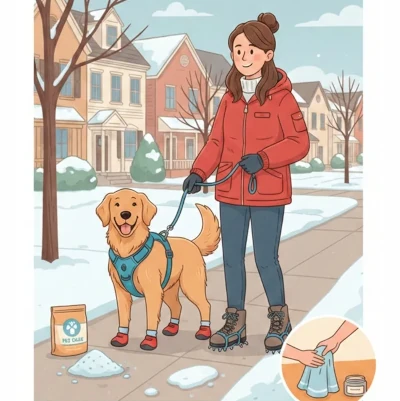
At Zoomies, our approach to gear is rooted in a simple belief: a walk should be the best part of a dog's day, not a physical struggle. Proper gear isn't about controlling a dog; it's about providing a clear line of communication and ensuring their physical well-being. When a dog feels secure and comfortable in their harness, they are more relaxed and responsive. When we add tools that improve the walker’s safety - like high-traction footwear for those icy sidewalks - it allows us to remain calm and grounded leaders for your pack. Safety and comfort are two sides of the same coin, especially when the Maryland winter throws us a curveball.
The Power of the Harness in Winter
When it comes to winter walking in Maryland, a harness can make all the difference in a slippery situation. Collars can be incredibly dangerous when the ground is slick; if a dog slips on a patch of black ice or the walker loses their footing, that sudden, sharp tension is directed entirely onto the dog’s delicate neck and trachea. Without the guaranteed traction of dry pavement, a standard walk can turn into a medical emergency in a split second. A harness redistributes that pressure across the strongest parts of the dog’s body, providing a safety net that a collar simply cannot offer.
Beyond the ice, there’s the sheer joy (and peril) of a fresh Montgomery County snowfall. We all know those pups who can’t resist launching themselves into a snow drift. If a dog plunges into deep snow and struggles to find his footing or hits a hidden dip, a collar becomes a liability. In those moments, a sturdy harness becomes a literal handle, allowing us to safely retrieve a dog who is stuck or disoriented without putting any strain on his throat.
The Y-Front Advantage
When we talk about harnesses at Zoomies, we aren’t just looking for something that stays on - we’re looking for safe and ergonomic. The Y-front harness is our gold standard because of how it sits on a dog’s skeletal structure. Unlike no-pull harnesses that wrap straight across the chest, a Y-front follows the natural contours of the neck and chest, meeting at the breastbone. This leaves the shoulder blades and joints completely free to move.
In the winter, this range of motion becomes a safety requirement. Navigating a snowy sidewalk in Rockville or trekking through the slushy trails in Potomac requires a dog to use their full athletic ability to maintain balance. If theirIn the winter, this range of motion becomes a safety requirement. Navigating a snowy sidewalk in Rockville or trekking through the slushy trails in Potomac requires a dog to use their full athletic ability to maintain balance. If their shoulders are restricted by a tight, horizontal strap, they can’t catch themselves easily and instinctively if they slip. A Y-front harness allows your pup to move naturally and confidently, ensuring they have their full four-wheel-drive capabilities engaged when the terrain gets tricky.
Front-Wheel or Rear-Wheel Steering
The choice between a front-clip and a back-clip attachment isn’t just about preference - its about physics. Most Y-front harnesses come with both options and knowing when to use which can make or break a walk.
- Front-Clip: Power Steering
Our go-to for pups who tend to “mush” or pull. The front-clip gives the walker much better leverage if a dog starts to pull or loses their footing. It gently redirects their momentum back toward the walker, rather than allowing them to lean their full weight into a forward lunge. - Back-Clip: Cruising Gear
Wonderful for well-mannered walkers or smaller pups who don’t put much tension on the line. We encourage caution with larger dogs; a back-clip encourages a dog’s natural opposition reflex - the urge to pull against pressure.
At Zoomies, we often transition between the two depending on a number of conditions and factors.
Fit Check
Even the best harness won’t do it’s job if it’s too loose or too tight. To ensure a proper fit, we recommend the Two Finger Rule - once the harness is buckled, you should be able to fit two fingers snugly between the straps and your dog’s body. If it’s too loose, a startled dog can back out of it in a heartbeat; if it’s too tight, it restricts their breathing and movement.
Winter Traction
Walking in Rockville or Potomac in the winter can be a little treacherous. It becomes a tactical mission, scouting for patches of black ice and navigating the chemical obstacle course of salted sidewalks.
Paw Protection
While salt makes the sidewalks safer for us, its a chemical irritant for your dog’s paws. Many commercial ice melts contain rock salt (sodium chloride) or calcium chloride, which can cause stinging salt burns in your dog’s delicate toe webbing. We suggest applying a thin layer of paw wax to your pup’s toes before heading out. For the more sensitive dogs, lightweight booties provide a layer of protection - though not every dog appreciates the awkward learning curve that comes with wearing them!
Human Traction
We can’t keep your dog safe if we’re sliding around ourselves! To stay grounded, the Zoomies team relies on professional-grade gear. You’ll usually see us sporting Merrell hiking shoes or boots - they are warm, waterproof, and provide high-traction tread that grips the ice.
Post-Walk Wipe Down
The walk doesn’t end the moment we step back inside; every Zoomies walk concludes with a thorough Post-Walk Inspection:
- De-Icing
We gently check between the toes for any ice balls or salt crystals. - Health Check
We look for any small cuts from sharp ice or signs of strained legs. - Dry Down
Moisture trapped in the fur can lead to skin irritation, so we make sure your pup is bone dry. - Finishing Touch
For those dry, crackled pawpads, we apply a pet-safe paw balm to the pads - think of it as a heavy duty lotion for split toe-beans.
Professsional Peace of Mind
Our mission at Zoomies is to make sure your dog’s adventure with us is the highlight of their day, regardless of the weather. We take our gear experience seriously because it allows us to provide a premium, worry-free experience for both you and your pup. We don’t just walk dogs; we manage the elements so they can just enjoy it. We’ve got your pack covered every step of the way.