1. The Origin Story
The Pumi (pronounced POO-mee) is an adorable herding dog that hails from Hungary. First emerging in the 17th and 18th centuries, they grew in popularity and gained international breed recognition in 1935. During World War I, many Pumi were lost with the livestock they guarded. During World War II, food shortages and a lack of veterinary care nearly destroyed the remaining populations. The breed slowly recovered, finally gaining AKC recognition in the Herding group in 2016.
These pups trace their roots back to the legendary Hungarian Puli, blended with classic European herding dogs and a few feisty terriers. This “terrier-like” influence is what sets them apart from other sheepdogs. While most herding dogs are calm “gatherers”, the Pumi is a bold, decisive, and loud “driver.” They were the versatile workhorses of the Hungarian plains, capable of moving livestock through narrow roads and tight spaces where a larger, more sheepish dog might hesitate.
2. The Look
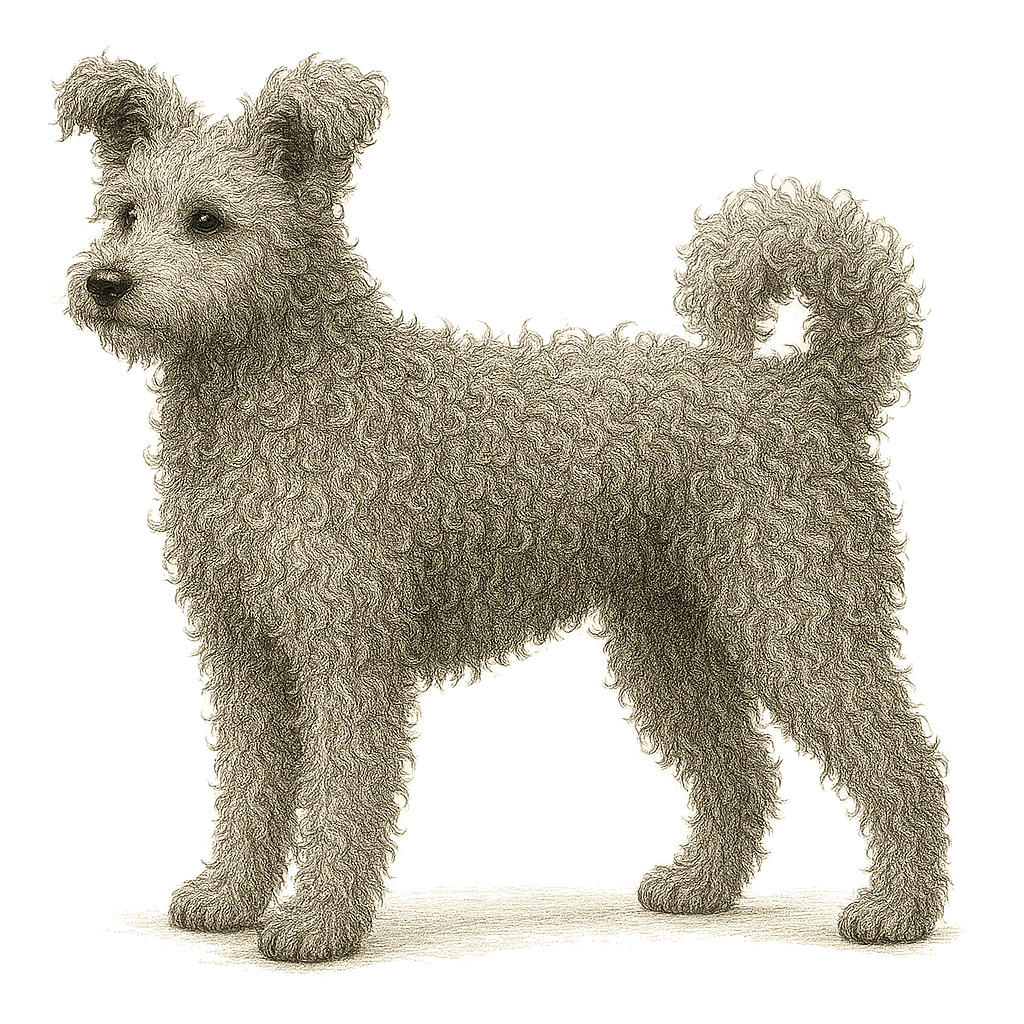
At first glance, the Pumi can easily be mistaken for a terrier or poodle mix, but they are a distinct with certain key recognizable features. Typically weighing between 22 and 33 pounds, have a lean and athletic frame hidden under a corkscrew coat. Their most famous feature is undoubtedly their large ears. Upright at the base and flopping over at the top, their ears are topped with tufts of curly hair that give them a perpetual expression of whimsical alertness. Their coat is a unique blend of 50% soft undercoat and 50% harsh guard hair, forming tight, springy curls that never felt. They come in various shades of gray, black, white, and a beautiful sandy color known as “fako.”
3. The Care Routine (Groomer’s Delight)
For a groomer, the Pumi is a masterclass in texture management and the importance of careful, patient care. Many breeds require blow-drying to achieve a finished look, but not the Pumi. As many of us curly-haired Marylanders can attest, heat and humid causes a frizzy, shapeless mess. Instead, the Pumi requires combing while the fur is wet. Left to air-dry, the tight curls will “set” naturally. Professional grooming involves a mix of clipping and hand-scissors to maintain their rounded, whimsical silhouette—particularly those iconic ears. Owners need to commit to thorough combing every few weeks to prevent the curls from matting at the skin. However, they are a low-shedding breed, making them a “delight” for owners who want to keep their Maryland homes fur-free.