Winning the Leash War Why “Beating the Pull” Starts Before You Leave the Driveway
Does your daily walk feel more like a game of tug-of-war? At Zoomies Dog Care, we believe that a peaceful walk doesn’t start five blocks away—it starts at your front door. If you’re struggling to stop your dog from pulling on the leash, the secret lies in understanding your dog’s “Threshold” and mastering the “Handshake.”
The Science of the Threshold: The Amygdala Flip
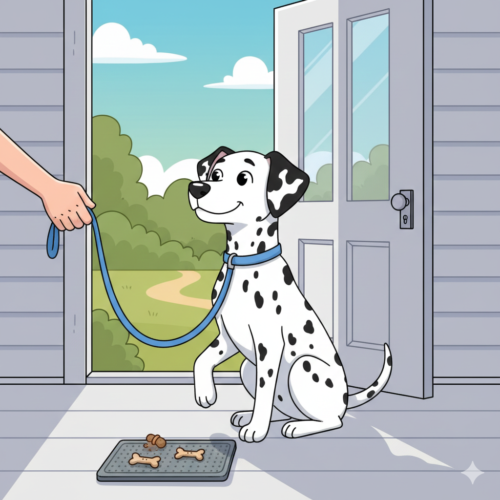
To a dog, the front door isn’t just a piece of wood; it’s a portal to a high-stimulation world. When that door cracks open, many dogs experience what trainers call Environmental Arousal. Their brain releases a surge of dopamine and adrenaline in anticipation of the world outside.
In this state, a dog’s “thinking brain” (the prefrontal cortex) often shuts down, and the “reactive brain” (the amygdala) takes over. This is why a dog who knows “Sit” perfectly in the kitchen suddenly seems to have “forgotten” it at the door. They aren’t being stubborn; their brain is physically flooded. By requiring a “Sit at the Door,” we force the thinking brain to stay engaged, teaching the dog that a calm mind is the only “key” that opens the door.
The Power of the Firm Handshake
Once the door is open, the connection continues through the leash. I always walk with the leash in my dominant hand to ensure a sturdy, unwavering grip. Think of it like a firm business handshake.
This provides what is known as Deep Pressure Input. Much like a weighted blanket helps a person feel secure, a firm, steady leash connection can actually help ground an excited dog. Your dog can feel your confidence through the line; if the leash is “staticy” and frantic, their energy will follow. A steady grip communicates that you are a calm, capable leader before the first step is even taken.
The “Power Duo” Reset
At Zoomies, we use a specific “Power Duo” tactic to break the Opposition Reflex (the physical urge a dog has to pull back against a tight leash). When I retrieve a dog from their home, my partner, Spray, waits just outside the door.
This creates a Competing Motivator. No matter how much a dog wants to bolt into the neighborhood, seeing Spray creates a mental “reset.” Their focus shifts from pulling forward to a calm social greeting. Starting the walk on this social, grounded note prevents that “Adrenaline Spike” from carrying through the entire walk.
The “Reverse” Rule: Taking Back Control
If the dog starts to pull toward a specific scent or squirrel, we immediately choose the opposite direction. This is a simple form of “Negative Punishment”—if you pull toward what you want, you actually move away from it. By controlling the route, we teach the dog that a loose leash is the fastest way to get to where they want to go.
A Pro Tip for the “Pre-Walk Ritual”
If your dog starts “spinning” the moment you pick up your keys, try desensitizing the trigger. Occasionally pick up your keys and put on your walking shoes, then simply go sit on the couch. Breaking the “chain of events” that leads to high arousal helps keep your dog’s baseline energy at a manageable level before you ever reach the driveway.
Note: While we aren’t professional trainers, we utilize these science-backed methods during all of our walks and taxi services to ensure your pet is safe, calm, and respected.